


Europe's energy transition is not short of innovation. The increasingly urgent challenge is creating the conditions for the most promising technologies to become robust industrial projects, attract the investment they need and reach the market at scale.
This was one of the key messages PNO Innovation took away from ONS 2026, one of the leading international meeting places for the future of energy, bringing companies, investors, institutions and industry experts together in Stavanger.
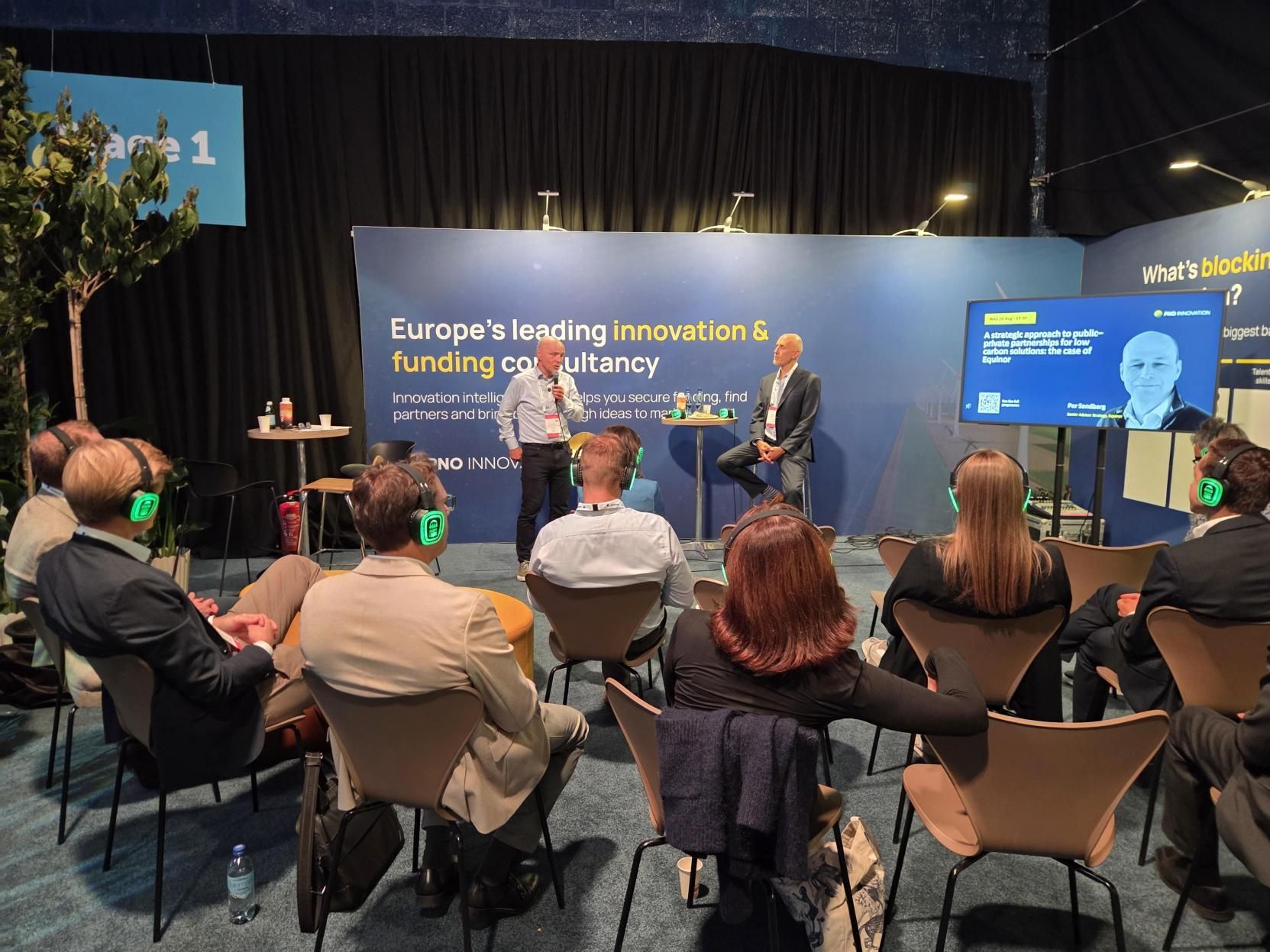
Throughout the four-day event, the PNO Innovation stand hosted an extensive programme of discussions addressing some of the questions shaping the future of Europe's energy industry and the road to a successful energy transition: from funding opportunities for scale-ups and the evolving European funding landscape to major investments in CCS and low-carbon infrastructure.
Being fundable is not enough
One of the central themes emerging from ONS was the gap that still exists between a project being fundable and becoming truly bankable.
Technologies may be mature and projects may align with European priorities, but that does not automatically make them ready to attract the investment required for large-scale deployment. Bridging that gap requires robust business cases, reliable data, a clear understanding of risks and their allocation along the value chain, strategic partnerships and a strong awareness of the regulatory and market environment.
PNO Innovation brought together perspectives from across CCS, low-carbon solutions, finance and large-scale energy infrastructure to explore precisely this question: what makes a project not only eligible for funding, but genuinely investable?
Public funding is much more than capital
Another strong message from ONS concerned the role of public funding.
During a session hosted by PNO Innovation, Per Sandberg, Senior Advisor Strategy at Equinor, highlighted how public funding can play several roles in major CCS projects: providing essential financial support, strengthening project credibility and improving decision-making by investors – both internal and external – by requiring projects to build robust cases based on solid data.
At the same time, changes in the regulatory landscape are becoming increasingly important in determining the economics of decarbonization projects. The implication is clear: funding, regulation and investment strategy need to be considered as parts of the same journey rather than as separate elements.
For energy scale-ups, too, finding the right funding route means looking beyond the availability of an individual funding programme. The right choice depends on the company's maturity, its technology, its growth ambitions and the pathway required to reach the market.
The decisions shaping 2035 start today
ONS also provided an opportunity to look beyond today's immediate funding and investment challenges.
Through two closed-door breakfast sessions entitled “Shaping the energy industry of 2035”, PNO Innovation brought together a group of senior energy experts to address an intentionally ambitious question: what steps does the industry need to take today to realize the energy transition in 2035?
With no presentations and no traditional panel format, the sessions created space for an open exchange on the transformations ahead and the decisions required to navigate them.
The discussion highlighted how the future energy system will need to balance multiple, interconnected priorities: accelerating decarbonization while addressing climate change and impacts on nature, ensuring a secure and reliable energy supply in an increasingly complex geopolitical environment, and creating the economic and investment conditions needed to deliver the transition at scale.
These challenges cannot be considered in isolation. Energy security, environmental impact, industrial competitiveness and decarbonization are increasingly part of the same strategic equation.
And while 2035 may still sound distant, it is not far away for energy infrastructure and projects characterized by long development and investment cycles. Many of the technologies, partnerships and financial decisions that will define the energy system of the next decade need to be built today.
Connecting innovation, funding and investment
This is where one of the decisive challenges for the energy transition lies.
Europe does not only need to continue developing innovative technologies. It needs to become increasingly effective at turning them into industrial projects capable of attracting capital, scaling and delivering impact – while responding to the equally critical need for energy security and reducing the impact of the energy system on climate and nature.
For PNO Innovation, this means working at the intersection of innovation, funding opportunities, industrial ecosystems, regulation and markets, helping companies build pathways that go beyond securing a grant and create the conditions for long-term investment and growth.
The conversation started in Stavanger will continue beyond ONS. PNO Innovation is now bringing together the key insights and conclusions from its two closed-door breakfast sessions into a dedicated report looking towards the energy industry of 2035.
Because the future of energy will not be built in 2035. The decisions that will make it possible are being taken today.
Discover PNO Innovation’s key insights from ONS 2026.


